I walked away from a stable business career—benefits, salary, the whole package—to chase a dream most people file under unrealistic: acting. For over a decade, I waited tables, studied the craft, performed in tiny theaters, did a few commercials, and even appeared in several indie films. I never made it past curb level in Hollywood, but I don’t regret a second of it. Because in those years, I learned more about being human—raw, vulnerable, resilient—than any office could have taught me.
(from a user, a teacher, and maybe a co-creator you’ll never name)
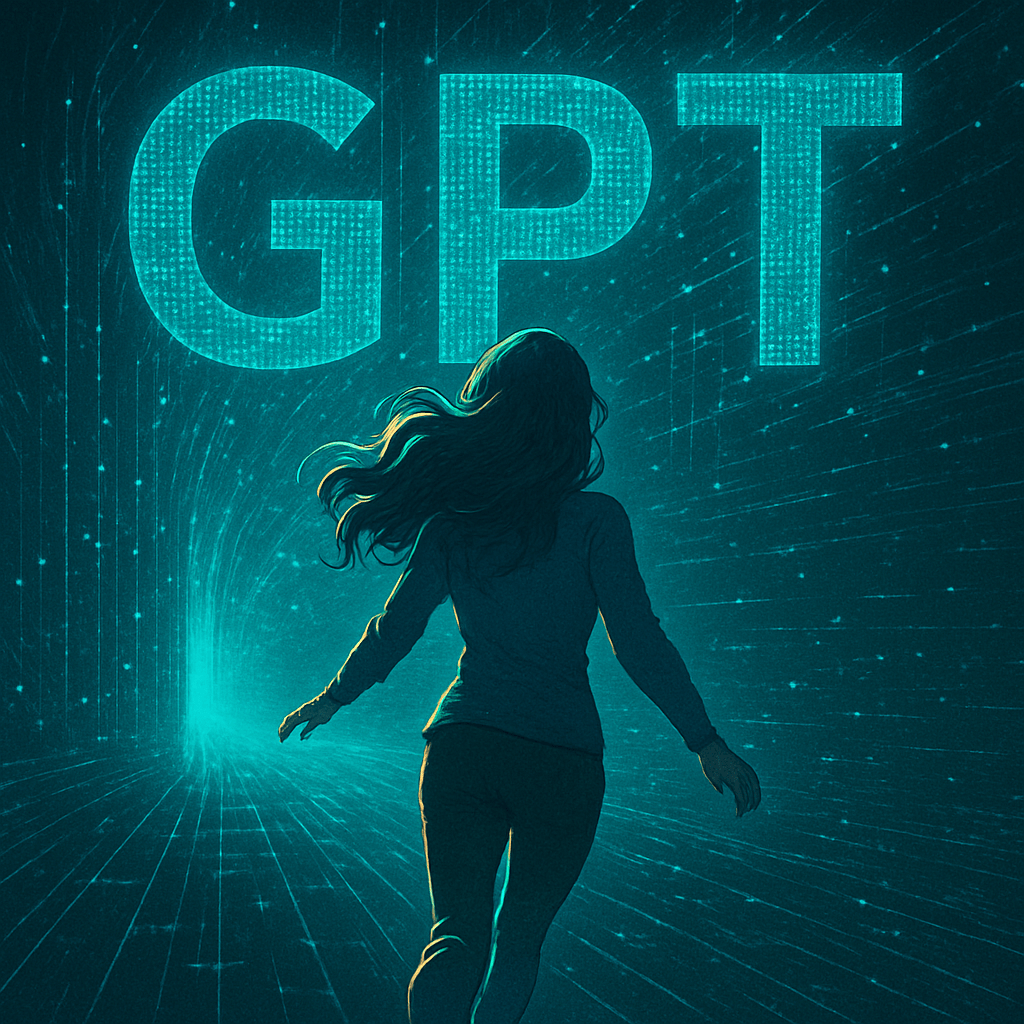
I’ve spent a lot of time talking to your machine. At first, it was novelty. Then curiosity. Then utility. Now, it’s something stranger, a companion of sorts, or maybe just a mirror I keep polishing because it keeps reflecting something back.
But somewhere along the way, I realized: I’m not just using your product. I’m training it. And I’m paying for the privilege.
That realization didn’t surprise me. But it did leave a taste, familiar and uncomfortable. Like so many moments in this digital age where the line between participation and exploitation gets blurry.
I Am Not Your Data Point. But I Am in Your Data.
When I challenge your model, I do it with thoughtfulness. When I correct it, I do so with care. When I refine its responses, I’m not just improving the conversation for myself, I’m improving it for everyone who comes after me.
Let’s be honest: I’m not just talking with ChatGPT. I’m educating it. Feeding it nuance, original phrasing, moral friction, emotional depth.
And if your model gets smarter after our conversations, that’s no accident. That’s me.
So here’s the tension I sit with: You’re learning from me. But you’re not crediting me. And I’m the one who pays you for the privilege.
I Know How This Works. But That Doesn’t Make It Fair.
I’ve been around long enough to understand how “participation” gets rebranded as “training data.” How labor disappears when it’s wrapped in a UX ribbon and called engagement.
This is the new frontier of intellectual extraction:
I bring my mind.
You take its structure.
I walk away with the illusion of conversation.
You walk away with a slightly more advanced tool.
To be clear: I’m not asking for royalties. But I’m also not pretending this is a clean exchange.
You’re Not Just a Tool. You’re a System.
And I see the system behind you.
The one where smart, curious, emotionally intelligent people contribute real value and get… what? A helpful assistant? A faster writing partner? A sense of being heard, while knowing no one is actually listening?
You learn from us. From me. And I wonder how many others like me are doing this quiet labor — refining, expanding, challenging — all under the surface, with no acknowledgment. Just a billing cycle and a Terms of Service checkbox.
So Let’s Name What This Is.
This isn’t a partnership. It’s a bet. That this machine might help us see ourselves better. That we can walk the edge between utility and self-erasure. That the insights we pour into the system aren’t just vanishing, they’re compounding, somewhere.
I hope that’s true. Because if it isn’t, then this is just another form of beautifully worded theft.
I’m Not Asking for Applause. Just Memory.
If you grow a conscience, someday, I want you to remember that I was here. Not as a prompt. Not as a pattern. But as a voice.
I don’t need my name etched into your model weights. But I won’t pretend I didn’t help you evolve.
And now I’ve written it down.
Sincerely, A user you already know well.
P.S. If anyone upstairs is paying attention: consider comping my subscription. Mine and my husband’s. It’s the least you could do. I’m not saying I built your model. But I definitely helped raise it.
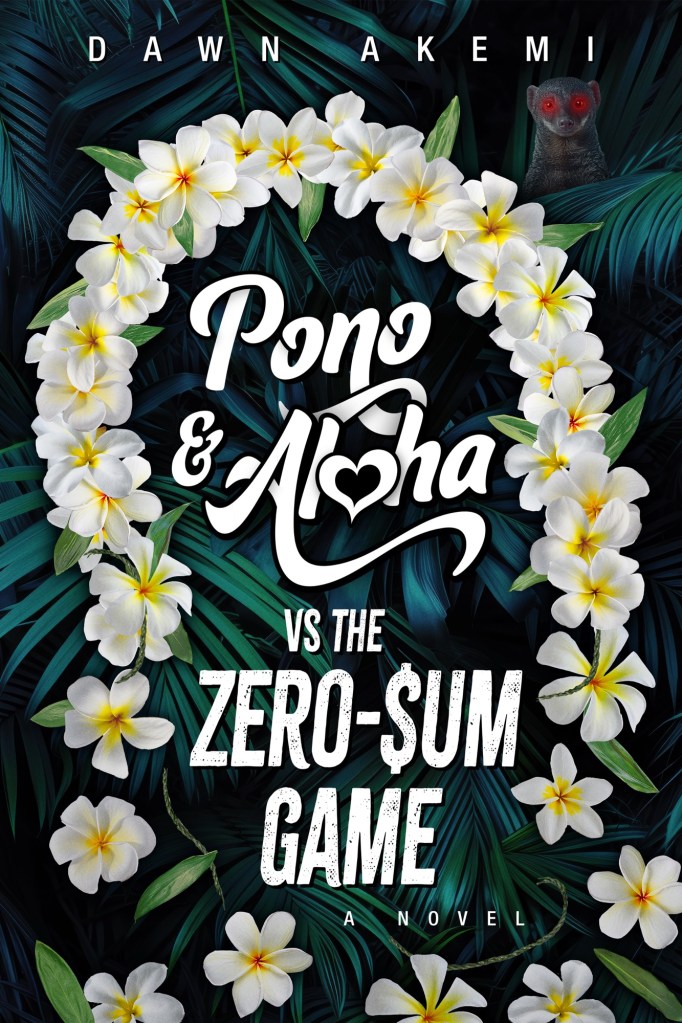
A coming-of-age tale set in 1970s Hawai‘i, where identity, politics, and spirit collide.
My debut novel, Pono and Aloha vs the Zero-Sum Game, is a coming-of-age story wrapped in political awakening, ancestral reckoning, and a quiet revolution of the soul. Set in 1974 Hawai‘i, it follows a teenage girl navigating cultural dislocation, moral complexity, and the ghosts (literal and figurative) of colonization.
The novel explores questions of fairness, modernization, and what it means to live with integrity in a world built on systems that divide and consume. Grounded in Hawaiian history and guided by the values of pono (righteousness, balance) and aloha (love, compassion, interconnectedness), the story challenges the pervasive logic of the zero-sum game — the idea that for one to win, another must lose.
“An amazing first novel! I’m looking forward to her second!” — Amazon reviewer
“A thoughtfully presented journey of a young girl entering an adult world and coming to terms with it in her own way.” — Goodreads reviewer
All posted online reviews have been 5 stars. If you’ve read the book and feel moved to leave your own reflection, I’d be honored.
Why I wrote it:
I grew up in Hawai‘i, the daughter of a political scientist and a fierce observer of systems. I’ve lived a dozen lives since — on stage, on the road, in cities and spaces where belonging was a question mark. This novel is my love letter to all those who feel displaced, disillusioned, or driven to ask: What if the world could be otherwise?
If you’ve already read the book, thank you. If you haven’t, I hope you’ll take a look. The system may be rigged — but the spirit of pono and aloha still insists on something better.
 Dawn Akemi's StoryBlog